Single tooth
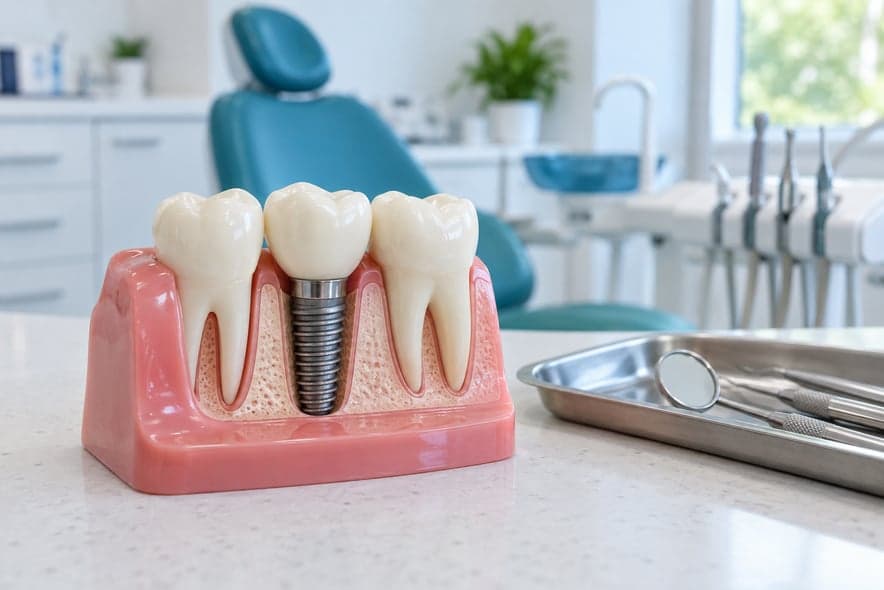
One implant with a ceramic crown on top. The teeth on either side are left untouched — unlike a bridge, which needs them trimmed.

Mon–Sat: 10:30 AM – 2:00 PM & 5:30 – 8:00 PM
Sunday closed
A dental implant is a small titanium post placed in the jaw where a tooth is missing. Once the bone has bonded with it, a ceramic crown, bridge or full arch is fixed on top. It does not rely on the neighbouring teeth and is cleaned like a natural tooth.
Which applies depends on how many teeth are missing and where — the assessment shows which.
One implant with a ceramic crown on top. The teeth on either side are left untouched — unlike a bridge, which needs them trimmed.
Two or more implants carrying a bridge, so a run of missing teeth is replaced without a removable plate.
A complete upper or lower set of teeth fixed on a small number of implants, planned as one staged treatment.
Surgical first, restorative second — with healing time in between. Dr. Rawat explains the timeline for your case at the assessment.
Examination, a digital X-ray and a look at your gums and bone. The plan and its cost are explained before anything is booked.
The titanium implant is placed in the jaw under local anaesthesia, in one planned visit.
The implant bonds with the bone over the following months — how long depends on your case. Dr. Rawat tells you what to expect and when to come back.
A digital impression is taken with the intraoral scanner, and the final crown, bridge or arch is fitted and checked.
Dr. Rawat weighs these at the assessment and tells you what applies to your case.
Two other ways to replace a missing tooth, both done here. The assessment tells you which suits your case and budget.
Timing, comfort, cost and aftercare.
Several months, because the implant has to bond with the bone before the crown or bridge is fitted. How long that takes depends on your case — Dr. Rawat explains the expected timeline at the assessment.
It is done under local anaesthesia, so you should not feel pain during the procedure. Some soreness and swelling for a few days afterwards is normal and is managed with the medication you are given.
It depends on the number of implants, the type of crown and whether a graft is needed. The cost for your case is explained before treatment starts, and EMI is available for larger treatments such as implants. The clinic does not offer insurance or cashless billing.
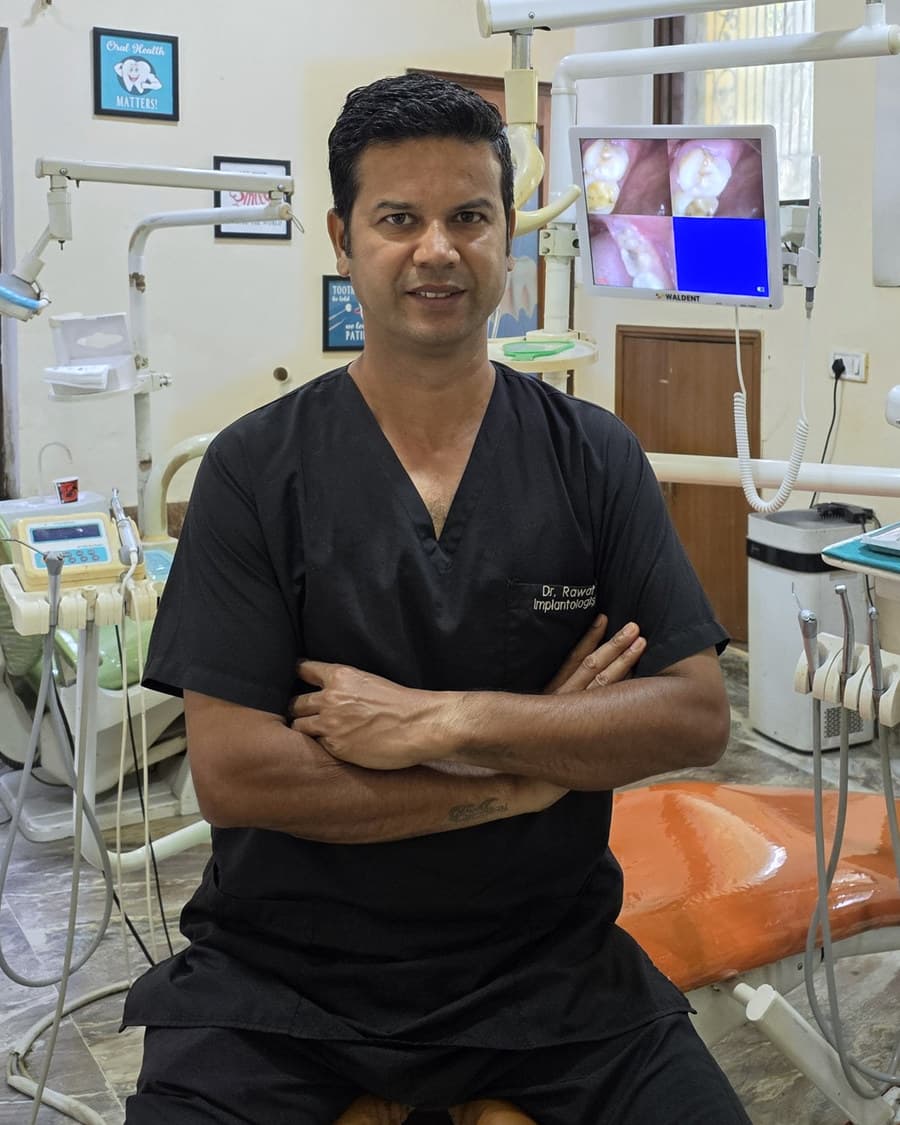
Dr. Bhupendra Singh Rawat, who has trained in oral implantology and is a member of the Indian Society of Oral Implantologists and the Academy of Oral Implantology. Implants are planned and placed at this clinic.
Like a natural tooth — brushing, cleaning between the teeth and regular check-ups. The clinic reviews the implant at your routine visits.
Walk-ins are welcome; booking ahead means less waiting. In pain? Call during clinic hours for a same-day appointment.